
Espaço Reserva Cultural
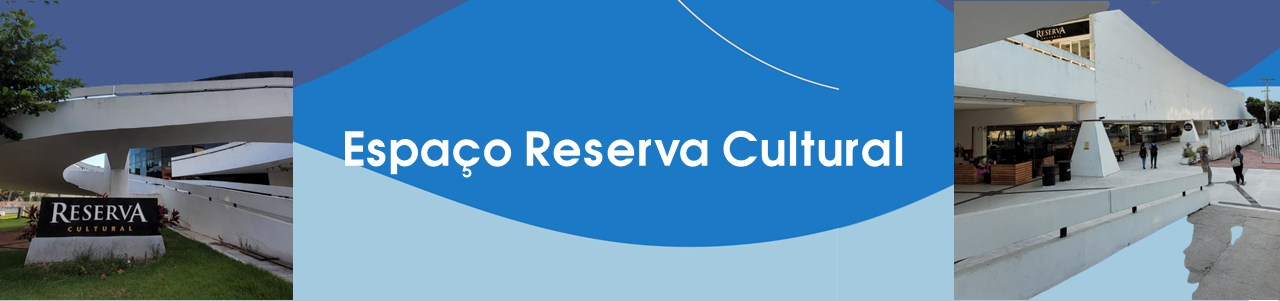
The XXII Brazilian Symposium on Theoretical Chemistry will take place in the Sala Nelson Pereira dos Santos, a multipurpose room that is part of the Espaço Reserva Cultural, located in Niterói. The place is complete and has its own parking lot, cafes, restaurants, and a bookstore. The complex also has five movie theaters with the best programming in Niterói.
The Espaço Reserva Cultural is located at Avenida Visconde do Rio Branco, 880 – CEP 24020-007, São Domingos – Niterói/RJ.
The location is easily accessible and you can get there by ferry boat, bus and car. The location is privileged, in front of Praça da Cantareira, allowing a 20-minute walk to Shopping Plaza Niterói, Estação das Barcas (Terminal Arariboia), hotels, restaurants and Niterói Bus Terminal in downtown. The space has facilities such as parking, access ramp and elevators.
Sala Nelson Pereira dos Santos

Now you know where SBQT 2023 will be held! But do you know who Nelson Pereira dos Santos was? Discover the history of this important figure in the cultural scene of Rio de Janeiro.
Nelson Pereira dos Santos was born on October 22nd, 1928, in São Paulo. He was 89 years old when he died, on April 21st, 2018. In the early 1950s, Nelson got a bachelor’s degree in law, but his passion has always been the cinema. He moved to Paris, where he studied at the Institut des Hautes Études Cinématographiques (IDHEC). The same institute was attended by several other Brazilian filmmakers. Still in the 1950s, when he was 27 years old, Nelson released a movie called “Rio 40 graus”, which decipted the everyday life of the city of Rio de Janeiro, showing off the “favelas”, the city postcards, football and samba. The movie portraying the evident social inequality in Rio de Janeiro and addressing Brazilian popular culture, was detained for several months by the Rio police. Two years later, he released the movie “Rio, Zona Norte”. Nelson's work was unprecedented in Brazil and it started the Cinema Novo movement.
However, his work was not restricted to talking about the big cities Rio de Janeiro and São Paulo. On the contrary, it became a great tribute to Brazilian cultural diversity. In the 1960s, he released “Boca de Ouro” based on the work by Nelson Rodrigues. In 1963, Nelson released an adaptation of the book “Vidas Secas” by Graciliano Ramos, which was nominated for the Palme d'or award at Cannes and won the OCIC award (Organisation catholique internationale du cinéma et de l'audiovisuel) in 1964. The second adaptation of a text by Graciliano Ramos was released in 1984, “Memórias do Cárcere”, and won the FIPRESCI (Fédération Internationale de la Presse Cinématographique) award at Cannes.
In 1968, Nelson was the founder and professor of the Cinema course at Fluminense Federal University – the second in the country. And he helped create the Instituto de Arte e Comunicação Social and Cine Arte UFF. In 2006, he was elected to the Academia Brasileira de Letras, where he occupied chair number 7, whose patron is Castro Alves.
Part of his speech at the Academia Brasileira de Letras, he made a brief mention of cinema novo: “I have participated, therefore, for half a century, in the process of growth and affirmation of Brazilian cinema, despite the accidents along the way in its essential relations with the State. What matters, however, is that current Brazilian cinema demonstrates vitality, creative and thematic plurality, becoming a representative of the country's multiple and rich culture”.
Caminho Niemeyer

The name Oscar Niemeyer is recognized by a large part of the Brazilian population and by the international community. But did you know that Niterói has the second most significant set of equipment and a cultural centre of great architectural value he designed?
Caminho Niemeyer is a complex of constructions that extends for 11 km along the seaside of Niterói. From Praça do Povo, in the Niterói downtown, to the Charitas Station. The constructions form the second largest architectural complex signed by Niemeyer, after Brasília.
Two of these buildings are part of SBQT 2023, the Reserva Cultural, where the Sala Nelson Pereira dos Santos is located and the Museu de Arte Contemporânea (MAC), which served as inspiration for the logo of the event.
The following are part of the set of works on Caminho Niemeyer:


